
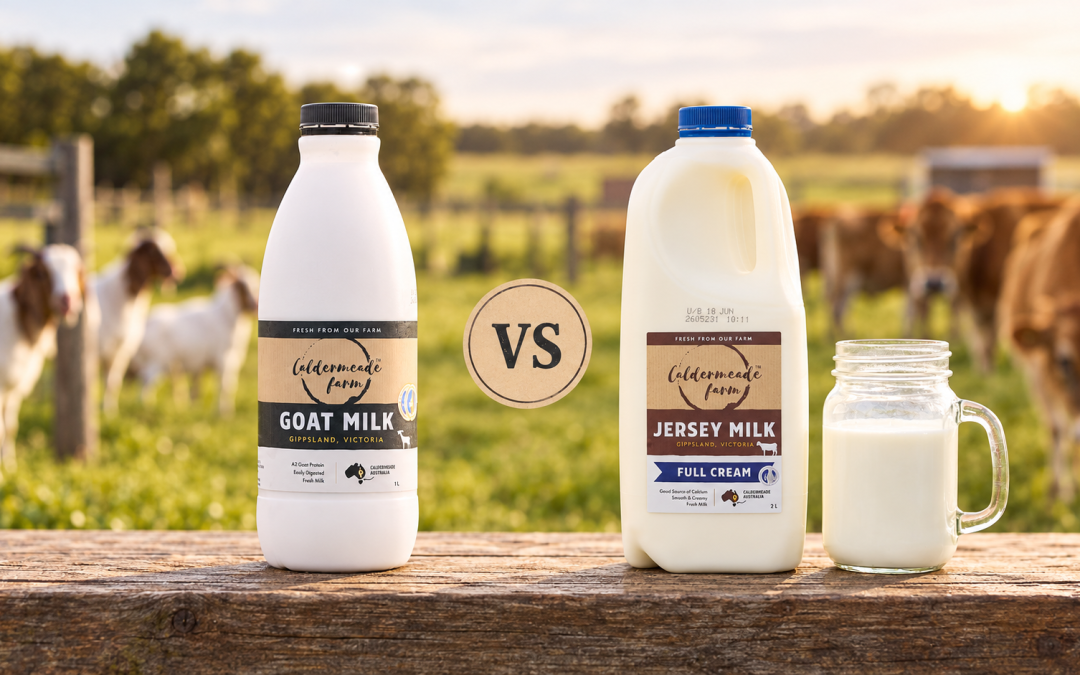
Goat Milk vs Cow Milk: What’s the Difference?
Cow milk is familiar in Australian households, while goat milk is gaining popularity as an alternative.
Both provide protein, calcium and other nutrients, but differ in taste, structure, protein composition and cooking performance.
Neither is automatically better. The right choice depends on taste, use and dietary needs.
Goat milk vs cow milk at a glance
| Feature | Goat milk | Cow milk |
|---|---|---|
| Taste | Mildly distinctive, creamy and sometimes slightly earthy | Familiar, clean and creamy |
| Texture | Smooth, with naturally well-dispersed fat | Varies by breed and processing; Jersey milk is especially rich and creamy |
| Protein | Contains goat milk proteins, including A2-type goat beta-casein | May contain A1, A2 or both types of beta-casein |
| Lactose | Contains lactose | Contains lactose |
| Nutrition | Provides protein, calcium and other minerals | Provides protein, calcium and other minerals |
| Allergy suitability | Not suitable for people with cow milk protein allergy unless medically advised | Not suitable for people with cow milk protein allergy |
| Common uses | Drinking, smoothies, coffee, baking and cooking | Drinking, coffee, cereal, baking and cooking |
Values vary by breed, season, formulation, fat level and serving size. Check each product’s nutrition panel.
1. How do they taste?
Cow milk has the familiar flavour many Australians know. Full-cream and Jersey milk are especially smooth and creamy.
Goat milk has a distinctive but often mild, smooth and creamy flavour. It is not necessarily strongly “goaty”, particularly when fresh and carefully handled.
Taste varies with diet, freshness, processing and storage. If you are new to goat milk, try it in coffee, smoothies or breakfast recipes first.
2. Is goat milk easier to digest?
Goat milk has different fat and protein structures from cow milk. Its smaller fat globules and protein behaviour may explain why some people find it comfortable to drink.
However, experiences vary. Goat milk is not universally easier to digest or a treatment for digestive conditions.
Ongoing discomfort may relate to lactose intolerance, milk allergy or another cause. These conditions require different advice.
3. What is the difference in protein?
Both provide complete dairy protein, but their individual proteins differ.
Cow milk may contain A1 beta-casein, A2 beta-casein or both. Goat milk naturally contains its own A2-type goat beta-casein.
“A2-type” does not mean allergy-free. Goat milk still contains milk proteins and must be declared as containing milk.
These differences can affect texture and curd formation, but do not make one milk universally superior.
4. Is goat milk lactose-free?
No. Goat milk naturally contains lactose, like cow milk.
Levels vary, but goat milk should not be promoted as lactose-free or assumed suitable for everyone with lactose intolerance.
Lactose intolerance involves difficulty digesting milk sugar. Tolerance varies, so check product information and seek individual advice.
It differs from milk allergy, which involves an immune response to milk protein.
5. Can people with cow milk allergy drink goat milk?
Generally, no.
Goat milk is not considered a safe substitute because its proteins may trigger reactions in people allergic to cow milk.
The Australasian Society of Clinical Immunology and Allergy states that most people allergic to cow milk are also allergic to other animal milks,
including goat milk, which may cause anaphylaxis.
Anyone with a known or suspected milk allergy should consult a qualified health professional before trying another animal milk.
6. How do their nutrients compare?
Both can provide:
- Protein
- Calcium
- Phosphorus
- Potassium
- Vitamin B12
- Riboflavin
Amounts vary with breed, season, feed, processing, fat content and fortification.
Claims that goat milk is always healthier or cow milk is always more nutritious can be misleading. Compare the nutrition panels on the products you are considering. The Australian Food Composition Database provides Australian reference information.
7. Can you use goat milk like cow milk?
Usually, yes. Goat milk can replace cow milk in most recipes, including:
- Coffee and tea
- Smoothies
- Porridge and cereal
- Pancakes and baking
- Sauces and soups
- Mashed potato
- Desserts
Goat milk powder is convenient, stores in the pantry and can be prepared as needed. Follow the pack directions, mix thoroughly and allow time to hydrate for the best texture.
So, which milk should you choose?
Choose based on your taste, intended use and dietary needs.
Cow milk suits those who prefer a familiar flavour. Rich Jersey milk works especially well in coffee, baking, yoghurt and desserts.
Goat milk offers a distinctive alternative, while full-cream goat milk powder provides convenient preparation.
At Caldermeade Farm, we celebrate both the richness of Jersey cow milk and the smooth character of Australian goat milk.
Neither is the winner. They are different dairy choices with their own qualities and uses.
Explore Caldermeade Farm’s Jersey milk and Australian full-cream goat milk , available online and from Coles, Woolworths and selected retailers .
Here to find the closest stockist
This article provides general food information, not medical or dietary advice. Caldermeade goat milk products contain milk and are not infant formula. Speak with a qualified health professional about allergies, intolerances or dietary requirements.
15 Sep 2026
Recent Comments